After the Towers Fell: My 9/11 Red Cross Deployment
We landed in New York in the middle of the night early October 2001. Nobody was there to meet us.
Somewhere inside American Red Cross headquarters, in a city that hadn’t slept for three weeks, there was a list with our names on it. A handful of Canadians arriving after midnight was not the emergency. In the middle of everything else, we had been forgotten.
There were five of us, joining a Canadian Red Cross delegation already on the ground.
So we made some calls and eventually found where we would be living for roughly the next month.
It was the first lesson of the deployment and it held for the duration of our mission: we were not the point.
What the Red Cross actually is
I should explain what I was doing there, and what the Red Cross actually is, because most people aren’t sure.
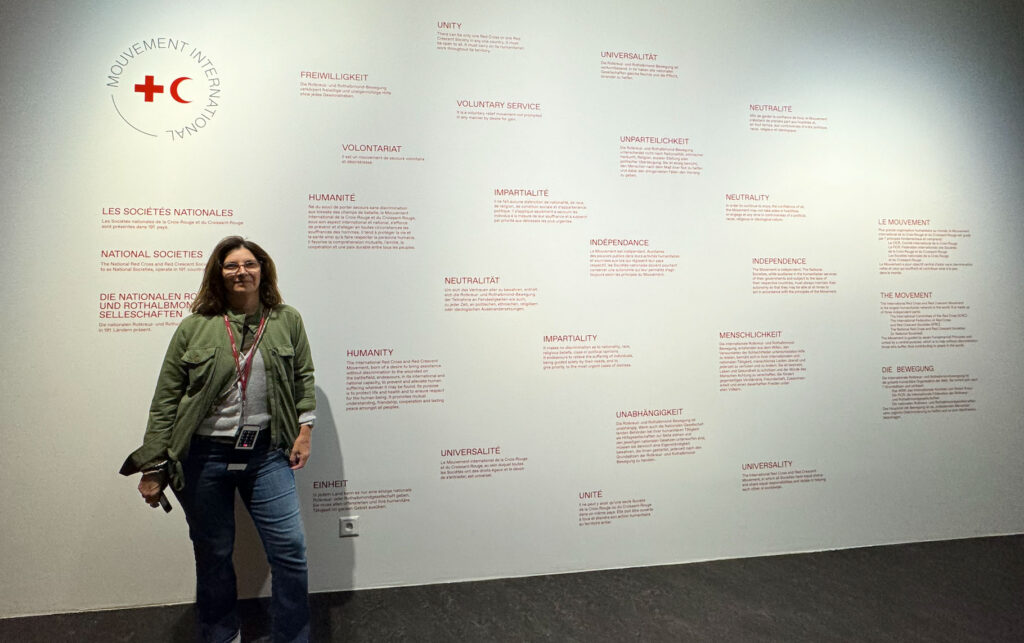
They think it is one organization. It is closer to 191.
The International Red Cross and Red Crescent Movement is made up of national societies, one per country, plus two bodies in Geneva. The International Committee of the Red Cross (ICRC) works in armed conflict. The International Federation of Red Cross and Red Crescent Societies (IFRC) coordinates response to disasters. The national societies do the work on their own ground. In Canada that means floods, fires, evacuations, the emergency down the road. When something exceeds what one country can carry, the others come.
That last part is why I was in New York after the terror attacks of 9/11. It is why five Canadians could be dropped into an American operation and put to work inside a system we already knew.
The whole movement runs on roughly 17 million volunteers and staff working out of thousands of local branches. Most of the workers are volunteers, and most of them you will never hear about.
That’s the part I find remarkable. Not that people want to help. People always want to help. It’s that a group of people built a structure durable enough to catch all that wanting and put it where it actually does some good, in the worst places on earth, on both sides of the line.
I worked with extraordinary people in my years with the Red Cross. I have never again been in rooms like those.
How I got on the plane
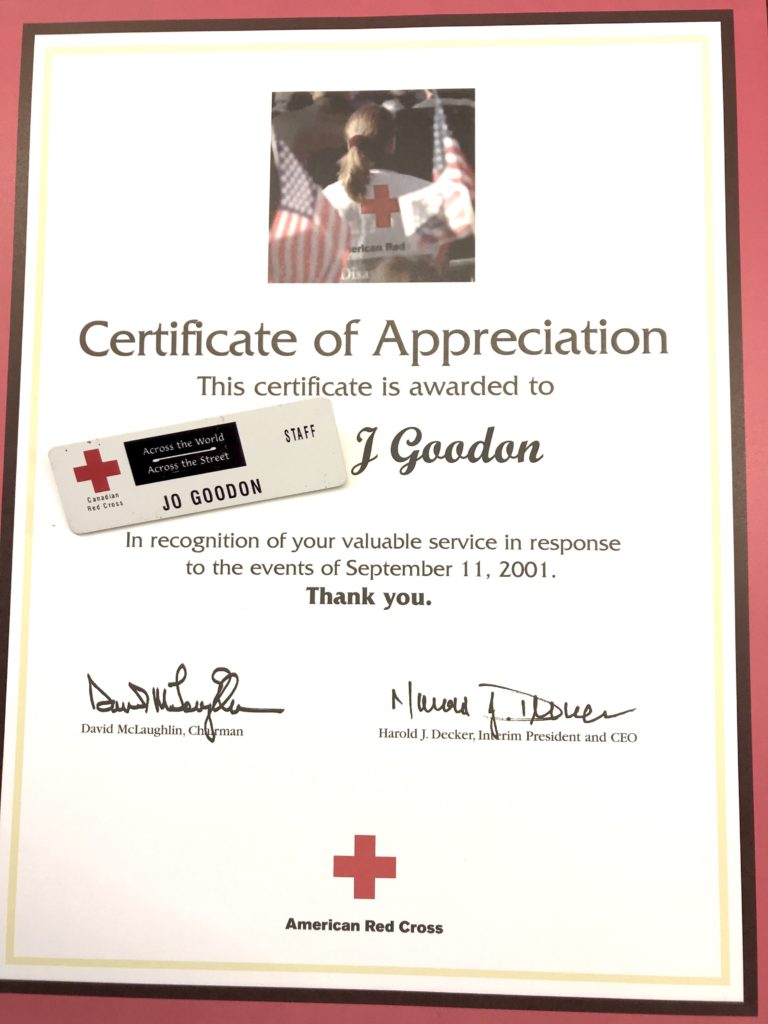
On September 11th , I was in my Canadian Red Cross public affairs office in Calgary with a small TV tuned to the news. Like so many others, I watched the towers crumble on live TV.
Within minutes the Red Cross machine was moving; my phone started ringing and did not stop for weeks.
Local media wanted the Canadian angle. What is the Red Cross doing? Are we sending people? Is the blood supply affected? What should Calgarians do right now? Can I send clothes? I coordinated many media interviews, and got briefed between each one so that what we said next was still accurate.
The public calls were harder and there were far more of them. People wanted to give money. People wanted to help. Very few called with an actual question. They called because sitting still was unbearable and we were the number they could think of.
Meanwhile, the response had already landed on our own soil. American airspace closed and the planes diverted to Gander and Halifax and fifteen other airports. Canadian Red Cross volunteers were opening shelters for tens of thousands of people who had gone to sleep expecting to wake up somewhere else entirely.
We ran briefings. We staffed fundraisers across the country. We answered the phones.
Then the call went out for trained Canadian Red Cross people to go to New York and support the American Red Cross. I wanted on that list.
There were no public affairs postings open. None. On what was going to be the biggest breaking media story of our lifetimes, the one job I was actually trained for did not exist.
So I looked at what did exist.
Volunteers were streaming into New York by the thousands, and every one of them had to be screened, vetted and placed somewhere useful. That work was wide open. I put my hand up for it.
That is how I got on the plane.
I screened volunteers for my first few days in New York. Roughly 6,000 came through those doors.
Then days into my deployment, I found the public affairs department, introduced myself, and spent the rest of the month doing the job I had been told did not exist.
I have told that story for years as a lesson about not stopping at “no openings at this time.” It is a decent lesson.
It is also the least interesting thing that happened to me in New York.
This is the rest of it.
Brooklyn, before light
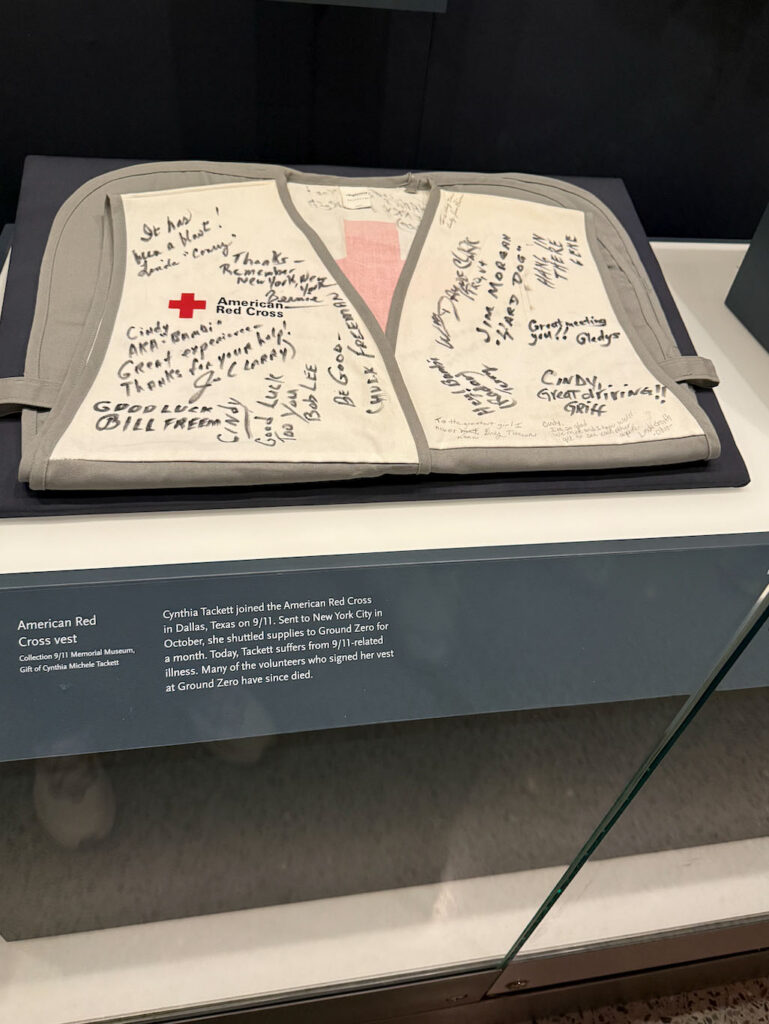
Our accommodations near the U.N. were nowhere near where we worked in Brooklyn. That meant the subway, in the dark, every morning, before the city was up.
I learned the system the way you learn anything under pressure. Badly at first, then quickly.
The Greater New York Red Cross had turned its Brooklyn location near Cadman Plaza into an operational centre. Supplies staged there and moved across the bridges into Manhattan. Caseworkers deployed from there. Mental health professionals. Emergency response vehicles. In the first days, thousands of New Yorkers had simply shown up at the doors wanting to give blood, give money, give anything.
By the time I arrived, three weeks in, the surge had turned into a system. That transition is the part nobody photographs.
The job
I was a public affairs officer. On the ground in New York that meant I was the Canadian Red Cross spokesperson, handling media requests from around the world.
It was my first time working with the BBC. It was not my last, but it is the one I remember, because I was standing in a borrowed office in a foreign country speaking for a foreign delegation inside somebody else’s operation and there was no version of that where I got to be nervous about it.
The requests came constantly and from everywhere. “What is the Red Cross doing?” “What do you need?” “What is it like down there?”
I coordinated stories about the work. I connected reporters with the people doing it. I worked with families who wanted their story told, which is a sentence that does not begin to describe what that involves.
And I told people what was not needed.
That’s the part nobody expects. In a disaster of that size, the whole world wants to help, and it helps in the only way it can think of, which is to send things. Somewhere in the chain, someone has to go on the record and say stop. Not that. Not here. Not now.
Saying no to generosity, out loud, to a reporter, while a country is grieving, is a specific professional skill. I have never seen it in a communications textbook.
The man in the lobby
The Red Cross deployed disaster mental health teams offering psychological first aid: acute crisis intervention and emotional support for people who were still upright, still functioning, and had nowhere to put what had happened to them.
In practice that meant listening without flinching, so that a person could say the worst thing in their head and not feel they were losing their mind. It meant respite and comfort stations near the site and at transit hubs and staging areas, where police, firefighters and construction crews could stop, sit down, and eat, for twenty minutes. There were recliners set up immediately beside the site so a person could sleep for an hour without having to leave it. It meant mental health workers at the Family Assistance Centre with families still searching. It meant hotlines, and outreach in shelters, airports and hospitals.
Red Cross workers recorded 374,000 connections of that kind. Emotional support, grief counselling, emergency health services. It was one of the largest things we did and it is close to impossible to photograph, which is probably why you have heard so little about it.
I met a man there. He was elderly, and he had lost his wife in the second tower.
She was in her eighties. She had worked as a receptionist for years. She did not need the job. Her family had told her that more than once. She kept it because she liked it, because she liked the people, because it was hers.
When the first plane hit the north tower she started down the stairs. Partway down, she was told to go back. The building was secure. Return to your office.
She did.
He told me this standing up, in a public space, to a stranger with a Red Cross badge, three weeks after it happened. I do not remember what I said back. I remember thinking that everything I knew how to do was the wrong size for this.
October
People talk about 9/11 as a day. I got there three weeks after and the city was still inside it.
The pile was still burning. Fires smoldered beneath the rubble for 99 days, into late December. You could smell it long before you could see anything. Jet fuel, plastic, pulverized concrete, and something underneath that nobody said out loud.
There were National Guard on the subway platforms and the bridges. Fencing crossed streets that had never been fenced. Missing persons posters were still up on phone booths and bus shelters, curling, rained on, weeks old. Nobody took them down.
Then the mail started arriving.
On October 12, an assistant at NBC News was confirmed to have contracted anthrax from a letter. Within days there were cases and exposures at CBS, ABC and the New York Post. Newsrooms were evacuated. People opened their mail with gloves, or with tongs, or not at all.
And the threats kept coming. That autumn the city ran on warnings. Scares, evacuations, alerts that reached the news before they reached anyone official. Every one of them landed on a population with nothing left to absorb it.
I remember one such scare while waiting in the subway to go home after a shift. Firefighters came streaming in from both ends without any warning, no instructions. We all stood still.
That is the image I carried home. Not the ruins. Not the smoke. Men running toward something unconfirmed, underground, in the dark, weeks after 343 of them had died doing exactly that.
That is the answer to the question every reporter asked me. What is it like down there? That is what it was like.
What it added up to
Some numbers, for scale. More than 57,000 Red Cross workers responded to September 11. They served over 14 million meals and snacks. They recorded 374,000 connections with people who needed emotional support or grief counselling. Close to $1.1 billion in donations funded relief for more than 59,000 families.
One hundred and forty-six Canadian volunteers were sent to New York. I was one of them.
Meanwhile, at home. When American airspace closed, Canada took more than 200 diverted flights across 17 airports. The Canadian Red Cross helped care for over 45,000 stranded travellers in airport halls, school gyms, church basements and community centres. Volunteers ran intake, found people phone lines to call home, and coordinated the neighbours who opened their own houses. Gander, Newfoundland, population roughly 10,000, took in about 6,600 people.
Same organization, same week, two countries, two completely different jobs. That is the structure working.
Here is what I know after 25 years. The worst thing people are capable of arrives all at once, on a clear morning, with no warning at all. The best thing people are capable of arrives slowly, in ordinary clothes, carrying supplies, and it keeps arriving for months.
Nobody in that city was waiting to be asked. They were already at the door with their sleeves rolled up. What the Red Cross has been doing since 1863 is take that instinct, which every one of us has, and give it somewhere useful to go. That is not a small thing to have built. There may be nothing more useful we have ever built.
Red Cross is there for everyone. And you can be, too
Long before I worked for them, they were there for us.
When I was ten, our house burned down on a bitter winter day in Manitoba. The Red Cross showed up for our family with supplies and a friendly face, and that has never left me.
I do not know that person’s name. They were not in the news. They were somebody’s neighbour who had put their name on a list at some point, and when a family a few roads over lost everything on one of the coldest days of the year, they came.
That is the kind of person I have spent my career working alongside, and almost none of them get airtime. The heroes who count are rarely the ones you can name.
It doesn’t require a badge or a plane ticket. Take the first aid course. Put your name on a volunteer list in your own town now, while nothing is happening, because the response that works is the one that was already standing there.
That is the real lesson of New York. The help doesn’t come from far away. It comes from next door, and the rest of us arrive later to back it up.
The Canadian Red Cross is at RedCross.ca. You can give, or you can volunteer. Both are needed. Neither has to wait for a disaster.


